MR Spectroscopy
We design and implement robust in vivo spectroscopy workflows, enabling reliable biochemical measurement beyond conventional MRI in brain and oncology studies.
MRS
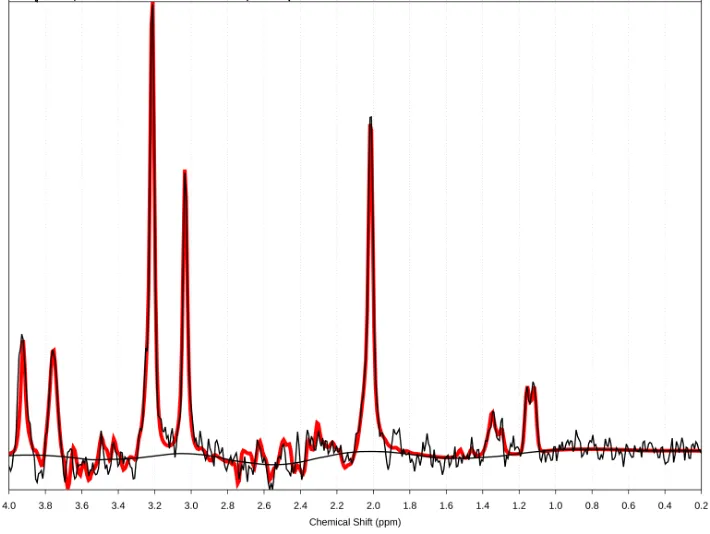
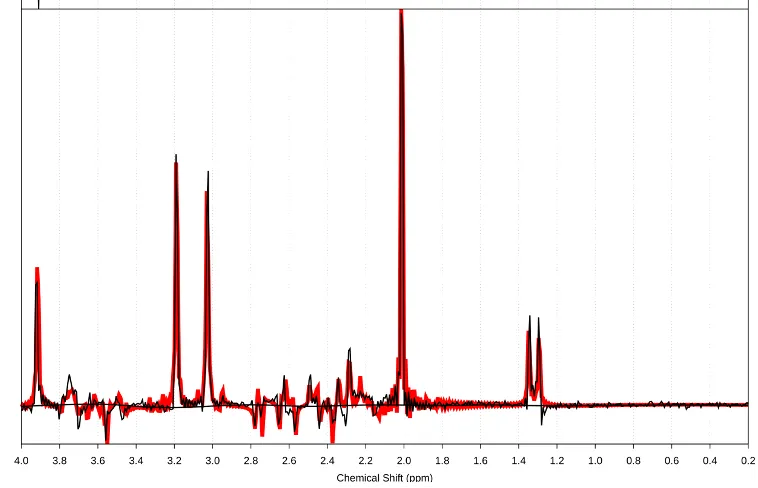
Magnetic resonance spectroscopy (MRS) is an MR technique that measures metabolites within tissue, providing biochemical information beyond conventional MRI. Depending on the organ and acquisition, it can detect compounds such as creatine, N-acetylaspartate (NAA), lactate and lipids, offering insight into tissue metabolism and viability.
Single-voxel spectroscopy is the most established MRS approach in clinical and research practice. A voxel is placed in a region of interest, and the resulting spectrum reflects the average metabolic profile of that tissue. Common acquisition methods include PRESS and STEAM. This approach is particularly useful for focused questions in a defined lesion or tissue region, where metabolite ratios or concentrations can help characterize disease and monitor treatment response.
Neuro

In the brain, MRS is used to assess neuronal integrity, membrane turnover and energy metabolism. Metabolites such as NAA, choline, creatine, myo-inositol and lactate provide insight into tissue viability and pathology, and can reveal abnormalities before structural changes become visible on conventional MRI. Brain MRS has applications in neurology, neuro-oncology, including tumour characterization, epilepsy, metabolic disorders, neurodegeneration and inflammatory disease.
MRS also plays an important role in neonatal hypoxic-ischaemic encephalopathy (HIE). In this setting, single-voxel spectroscopy is commonly acquired in deep grey matter structures such as the thalamus or basal ganglia. A key biomarker is the lactate-to-NAA ratio (Lac/NAA), which reflects the combination of anaerobic metabolism and neuronal injury, and is widely used in studies of prognosis, therapeutic hypothermia and neuroprotection.
In practice, lactate is often assessed using a long echo time of 288 ms, which produces a positive in-phase doublet and reduces overlap from other metabolite signals. The main drawback of longer echo times is reduced signal-to-noise ratio (SNR), although this can be mitigated by improved hardware, higher field strengths and longer acquisition times.
Oncology
In oncology, MRS provides a non-invasive view of tumour metabolism and biochemical heterogeneity. Depending on the tissue, it can help assess features such as cellular proliferation, necrosis, membrane turnover and metabolic stress. This makes it valuable for lesion characterization, treatment stratification and longitudinal response assessment.
MRS

Bioxydyn includes cross-site harmonisation, quality-controlled spectral analysis, and validated quantification pipelines. Through dedicated phantom validation and controlled processing workflows, we ensure spectroscopy biomarkers are reproducible, accurate, and suitable for pharmaceutical-grade studies. We also provide robust de-identifications and data transfer for proprietary MRS formats through VoxelFlow.